
In any line of business one of the keys to success is evaluating what the competition is doing.  In this age of internet business it means checking out their website, their blog and their backlink profile.

All of these areas can identify areas for improvement and new ideas.  Their website may give you ideas on establishing new pages to better rank for long tail keywords, their blog can indicate topics that are popular and attract the customer base you are searching for, and their backlinks can open up new areas for attracting or expanding your audience.

Checking the competition’s backlinking can point out missed or overlooked opportunities.  What you are looking for is possible backlink opportunities that are of high value and if possible, low or no cost.  In the past this was a very time consuming and tedious task.  It required spending a great amount of time developing a list of competitors’ backlinks and then checking them all out to find opportunities.

There are a number of articles on the web about the importance of competitor backlink prospecting and most of them provided a listing of programs available such as SEOMoz, SEM Rush, etc. that you can use to accomplish this, but most of them leave out the details of how to go about doing it effectively and efficiently.

I recently did an analysis of backlink opportunities for a client and tried out a new system that worked extremely well for me.  It quickly identified backlink opportunities in areas of news releases, industry articles and industry directories, without the days of work previously required.

After identifying the clients’ chief competitors I did an analysis of all of them to determine the 3 that ranked the highest for their website’s domain authority.  I then used Open Site Explorer and the process listed below to determine those high value backlinks used by the competition that the client was missing in their backlink profile.  I initially selected the top 50 backlinks of each competitor but expanded it to the top 100 to provide a suitable list of opportunities.

Steps to the Process:

  1. Identify competitors and determine the top 3 based on domain authority
  2. Identify keywords and check search engines to determine whether or not those selected are the top competitors based on how they rank in the Search Engine Results Pages (SERPs).
  3. Set up an SEOMoz campaign and include the client and top 3 competitors
  4. Use Open Site Explorer to get a list of  backlinks for all four
  5. Sort all backlinks of each one by Page Authority
  6. Copy top 100 backlinks and paste onto new spreadsheet.  Highlight each one in a different color.
  7. Remove all internal links and duplicates
  8. Add new column A to spreadsheet
  9. Copy full URL (Column B) and paste into Column A
  10. Shorten link URL in Column A to root domain
  11. Sort entire file by shortened root domain URL alphabetically. (Column A)
  12. Delete any backlinks the client already has
  13. Remove all remaining client backlinks.
  14. Check full URL (Column B) to determine whether or not the competitors paid for the links and evaluate the relevancy of the source, and delete any paid links and non-relevant sites.

You will be left with high value backlinking opportunities which require no cost other than time.  The process typically takes about four to six hours of hard work, but the result could be a hefty increase in high quality backlinks for the client.

Did you find this post helpful?  If so, please share it with others. Have other thoughts on this topic? Please post a comment below.

For more SEO tips, please Like us on Facebook and Follow us on Twitter.

Image courtesy of Stuart Miles / FreeDigitalPhotos.net

{ 0 comments }

The Importance of the Meta Description Tag

by Harry Lennard on May 5, 2013

In 2010 I wrote a blog post about meta tags in general, but I want to focus today on the meta description tag because it is so important. It is frequently the difference between someone clicking on your search result or choosing another result. Here’s how Google uses the meta tag information.

If you’re meta description tag is relevant to the contents of the web page, Google will use the meta description for the search results description. If it’s not relevant to the page contents or a meta description tag doesn’t exist, Google will grab a snippet of code from the page to use for the search results description.

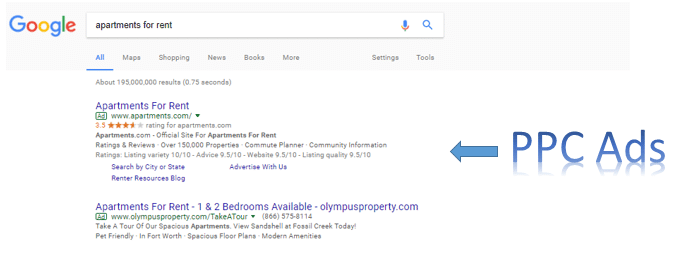
So your meta description is your sales pitch; it similar to your ad text in pay-per-click ads. To obtain the best click-through rate on your search result, the meta tag needs to be relevant to the page contents and should be benefit-oriented.

Here’s an example of a search result for “Irving TX real estate” with a good meta description. The description gives you a reason to click:

And here’s an example where there is no meta description and Google pulled random copy from the web page. There’s not here to motivate you to click on this result:

Your search engine optimization work does not end with a good Google ranking. If you don’t give people a good reason to click on your result, your Google ranking may be wasted.


{ 0 comments }

SEO Tip of the Week

Creating Effective Title Tags Just as the title of a book gives the reader an indication of what the work is about,  Title tags tell search engines what Web pages are about.  For that reason, you need to create unique titles for every important page on your site. Be sure to include your primary keywords [...]

Read the full article →

Alas, Poor Google Reader . . .

With Google Reader destined for the “ashbin of history” on July 1,  UK-based Hit Reach offers up this fitting (albeit tongue-in-cheek) requiem for the beloved feed service. And, of course, you had to see this one coming . . . Please feel free to pay your final respects in the comments below. Please connect with us on [...]

Read the full article →

Google’s Evolving Personalized Search Results

SEOMOZ’s Rand Fishkin describes personalization, as it applies to Google’s search algorithm as,  “Usage data I mean the areas where Google is showing you or other users specific things based on your usage activities, where they are leveraging usage data, broad usage data, for many users to come up with different changes to these types [...]

Read the full article →

A Day in the Life of a Social Media Manager

It wasn’t that long ago that social media was touted as an easy way for businesses to create their online presence.  Like all marketing, however, social media takes work . . . lots of work . . . in order to deliver the desired results. Thanks to MarketingHits.com for this infographic outlining the duties of the typical social [...]

Read the full article →

What Facebook Graph Search Means for Local Businesses

Over the years, Facebook has touted a variety of modifications as “game changers.”  This time the reality could very well match the hype. The infographic below (compliments of Advantage Capital Funds) shows why Facebook’s Graph Search will benefit local businesses by providing them a level playing field alongside brand pages. By the way, if you’re [...]

Read the full article →

Welcome to BingBook

Microsoft says its Bing search engine got “five times more content” by adding Facebook results in a sidebar on its organic SERPs today. Users who are logged into Facebook will now see relevant results from others within their social network.  This is similar to the way social content from Google+ appears in Google’s organic results. [...]

Read the full article →

Google’s New Voice Search for Desktop Available on Chrome

If you’re like a lot of people, you seldom use your desktop or laptop computer’s auxiliary or built-in microphone, but that may be about to change. On Monday, Google launched its “voice search for desktop” technology. The feature is currently only available to users of Google’s Chrome browser.  Read more. Have you tried it yet? [...]

Read the full article →

Link Building Best Practices in the Post-Penguin Era

How has Google’s Penguin update affected link building?  KISSMetrics.com CEO Neil Patel explains that it’s still about “Quantity, Quality, Diversity and Velocity” in this video interview.

Read the full article →